
Hotel In-Room Safe Requirements: 2026 Bleisure Trends
The ‘Bleisure’ Tech Surge and Hotel In-Room Safe Requirements
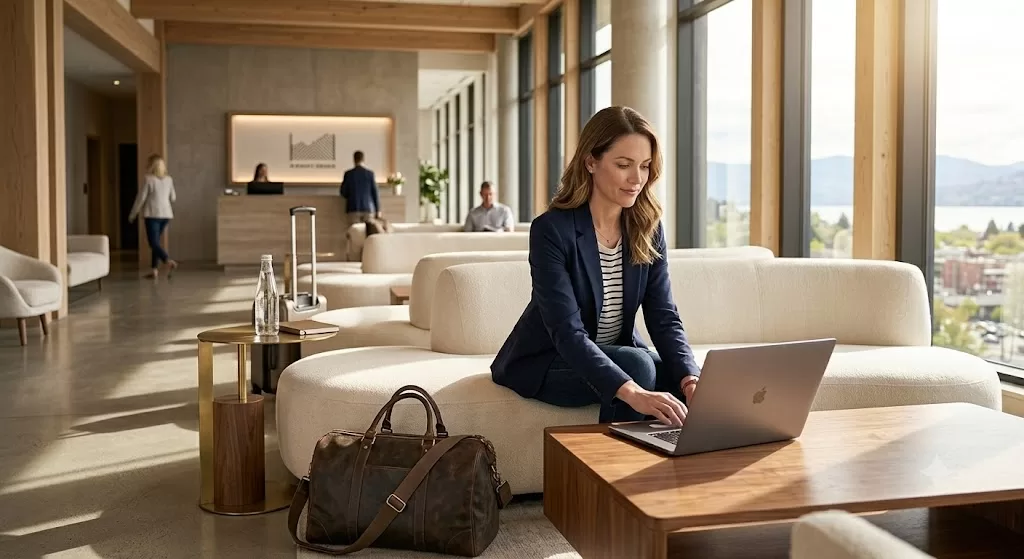
The line between business and leisure travel has permanently blurred, directly impacting modern hotel in-room safe requirements. This shift toward “bleisure” travel changes everything. Guests no longer just pack a swimsuit and a paperback. They now bring their complete remote offices with them.
Guests travel with significantly more hardware today. Standard small safes were designed a decade ago for wallets, passports, and the occasional tablet. These older models are increasingly out of step with what guests now carry, which is why hoteliers are being asked to revisit hotel in-room safe requirements. For a property competing for the bleisure segment, that’s no longer a cosmetic upgrade — it’s a direct response to what today’s guest actually brings through the door, and to the liability that comes with failing to secure it. You must protect the guest experience and follow modern lodging safety guidance.
1. Changing Guests Impact Hotel In-Room Safe Requirements
Today’s blended travel itineraries bring multi-day stays. Guests routinely combine remote work with their vacation time. Industry estimates suggest the average guest’s in-room tech (laptop, tablet, secondary monitor, camera gear) can commonly represent $3,000–$5,000 in replacement value
Modern travelers carry 15-inch to 17-inch laptops and portable monitors. They also pack tablets, mechanical keyboards, and expensive camera gear. The quick, one-night business stay is fading. Guests now treat their hotel room as a highly connected productivity hub. A property’s bleisure guest amenities must reflect this reality. Otherwise, guest confidence drops the moment they walk through the door.
2. Hidden Costs of Outdated Hotel In-Room Safe Requirements
Failing to meet modern hotel in-room safe requirements introduces measurable friction, not just an inconvenience. It shows up in two concrete places: guest experience and operational/liability risk.
- Space Friction: When asking how big should hotel room safes be, hoteliers need to size against the devices guests actually carry today. Small, outdated safes lead directly to a specific problem: guests leave laptops and tablets exposed on desk surfaces because they simply don’t fit. That visible exposure raises guest anxiety about theft, and it raises the stakes for staff who enter the room for housekeeping or turndown, since any missing item becomes harder to account for.
- Liability & Audit Capabilities: Outdated security systems lack the software necessary to protect management when a dispute arises. Modern electronic locks pair with digital audit trails for exactly this reason. Safemark’s Emergency Handheld Override (EHO) system is one example: it maintains an encrypted history of the last 200+ lock events, so if a guest reports a missing item, staff can check the record rather than relying on memory or guesswork. That audit trail is what actually resolves internal disputes and clears staff of unwarranted suspicion — not the safe itself, but the record it keeps.
3. Modern Guest Room Safe Technology and Amenities
Forward-thinking 4- and 5-star properties want to capture the lucrative bleisure demographic. To do this, they are upgrading core in-room technology amenities for 2026. Focus on these three primary categories:
- Adequate, Discreet Storage: The new brand standard dictates safes capable of holding large devices. The upgraded Safemark DN 5.4 V2 features a 15-inch capacity. The DNX 5.4 V2 offers a 17-inch capacity. These top-opening drawer safes lead the industry here. Both models integrate seamlessly into modern credenzas and desk drawers. They feature an overlapping door design for a larger opening. Dual hydraulic support ensures exceptionally smooth operation. Furthermore, enhanced dual locking bolts secure high-value tech discreetly out of sight.
- Power and Connectivity Hubs: With multiple devices to manage, guests require easily accessible, fast-charging ports seamlessly integrated into desks and nightstands. This ensures their portable monitors, laptops, and tablets are always powered up and ready for the next meeting.
- Quiet Efficiency: A remote office must be free of distractions. Energy-conscious mini refrigerators, like Safemark’s EcoSmart line, run with whisper-quiet efficiency. Guests can take conference calls or sleep soundly. They never have to hear the disruptive hum of outdated compressor units.
4. Auditing Your Hotel In-Room Safe Requirements
Use this quick checklist to evaluate your current hotel laptop safe sizes and overall room technology:
- Can a 15-inch or 17-inch laptop fit flat inside your existing guest room safes without angling the device?
- Do your current safes maintain an encrypted, downloadable audit trail of the last 200+ access events?
- Are your in-room mini-refrigerators meeting current sustainability standards while operating quietly?
Frequently Asked Questions (FAQ)
Modern hotel in-room safe requirements have shifted from storing just passports and cash to securing high-value electronics. Properties are now expected to provide safes with a minimum 15-inch capacity to accommodate standard laptops, alongside encrypted digital audit trails to ensure maximum security and operational transparency.
To comfortably fit modern work devices, a hotel safe should have at least a 15-inch internal capacity (such as the Safemark DN 5.4 V2). For properties catering to extended-stay bleisure travelers or high-end suites, 17-inch safes (like the DNX 5.4 V2) are recommended so laptops and secondary monitors can lie completely flat without risk of scratching.
Advanced hotel safes mitigate hotel liability for stolen guest electronics by maintaining a downloadable audit trail of the most recent 200+ lock events. If a guest claims an item is missing, management can instantly verify exactly when the safe was accessed and by whom (via the Safemark EHO system), protecting staff from unwarranted suspicion and disproving fraudulent claims.
Alongside secure storage, the 2026 bleisure traveler expects a fully upgraded room environment. Top in-room technology amenities in 2026 include easily accessible high-speed charging hubs, robust Wi-Fi, and energy-efficient, whisper-quiet mini-refrigerators (like the EcoSmart line) that will not disrupt remote work or sleep.
Elevate Your Guestroom Security & Amenities
Outdated amenities directly impact your property’s reputation and your staff’s liability exposure. Upgrading to appropriately sized laptop safes and modern tech bridges the gap perfectly. It aligns guest expectations with operational security.
Ready to modernize your guest rooms? Contact the Safemark team today. Request a Guestroom Security & Amenity Audit. You can also get a custom quote for property conversions. Enhance your rooms with our latest DN V2 series drawer safes and premium lifestyle amenities.